
Know the Facts

Choosing the Right Head Protection

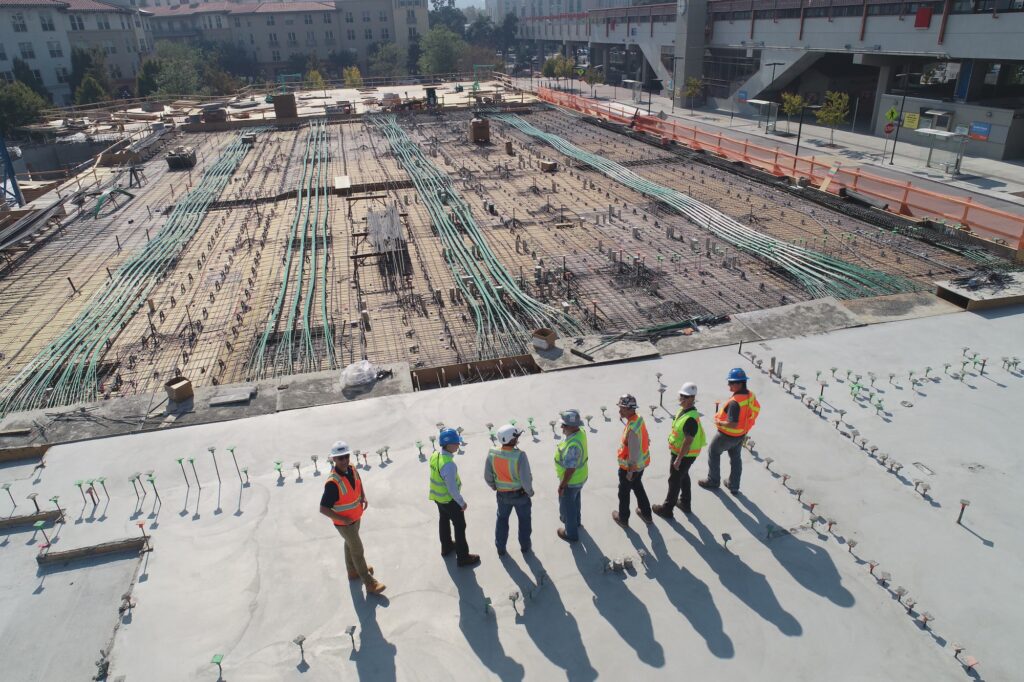
There are a lot of misconceptions about industrial head protection available today. The stakes couldn’t be higher: 195,720 head injuries to workers in the US were reported from 2021 to 2022, and 684 workers died from their injuries in 2022. Fewer than half of workers experiencing a fall-related head injury were wearing any head protection.

There are a lot of misconceptions about industrial head protection available today. The stakes couldn’t be higher: 195,720 head injuries to workers in the US were reported from 2021 to 2022, and 684 workers died from their injuries in 2022. Fewer than half of workers experiencing a fall-related head injury were wearing any head protection.

When it comes to head protection, there’s no one-size-fits all solution. It’s essential to select the appropriate type and class of head protection for the specific work environment and potential hazards (more on this below). Selecting the right head protection requires understanding the hazards of the job and the differences among helmet types, electrical classes, and performance designations, including the new Type I+ and Type II+ options.

Head Protection Today

Fact or Fiction?

Several myths and misconceptions exist regarding the different types and styles of head protection. Let’s unravel the truth behind this essential PPE.

SAFETY

Climbing style head protection is better and safer than industrial hard hats.

FICTION

Blanket statements like this are confusing and misleading. When picking the right head protection for your job, make sure to consider all hazards and job requirements.

No single type of head protection is “best” or “safest.”

REGULATION

OSHA will issue a citation if workers aren’t wearing climbing-style head protection.

FICTION

OSHA provides its inspectors with climbing-style head protection. This internal OSHA decision has no impact on whether OSHA will issue a citation.

OSHA does not require a specific head protection style. Employers must select compliant or equivalent head protection based on the hazards workers face and ensure it is properly used and maintained.

TRADITIONAL

Industrial hard hats are old and and don’t have modern features.

FICTION

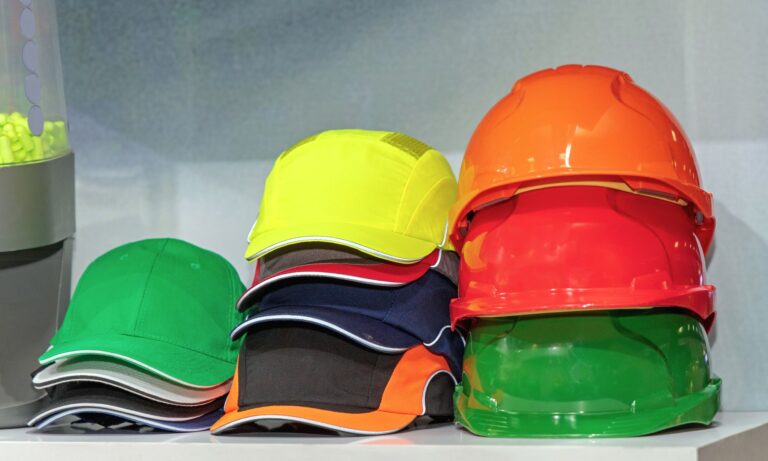
Be wary of terms like “traditional hard hats” – while protecting workers for over 100 years, hard hats are available with cutting-edge innovations in material science, cooling technology, and sensors.

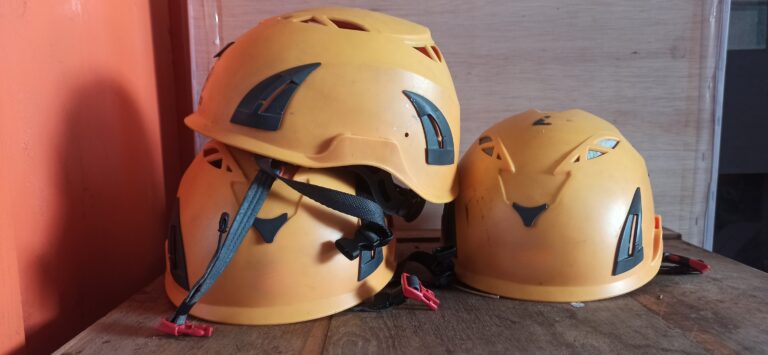
Many varieties of head protection are available with chin straps and a wide variety of accessories, including earmuffs, goggles, and more.

STANDARDS

There is an American standard for climbing-style helmets.

FACT & FICTION

A climbing-style helmet can meet the requirements of the current Z89.1-2014 (R2019) standard, as either a Type I or Type II. The standard is performance based and does not describe the style or design of the helmet.

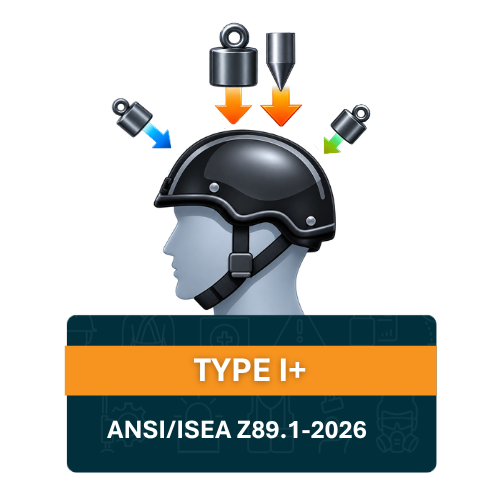
ANSI/ISEA Z89.1-2026 introduces the Type I+ and Type II+ designations to recognize additional performance requirements involving chin straps, helmet retention, and expanded impact protection.

STANDARDS

EN12492 is better than ANSI/ISEA Z89.1.

FICTION

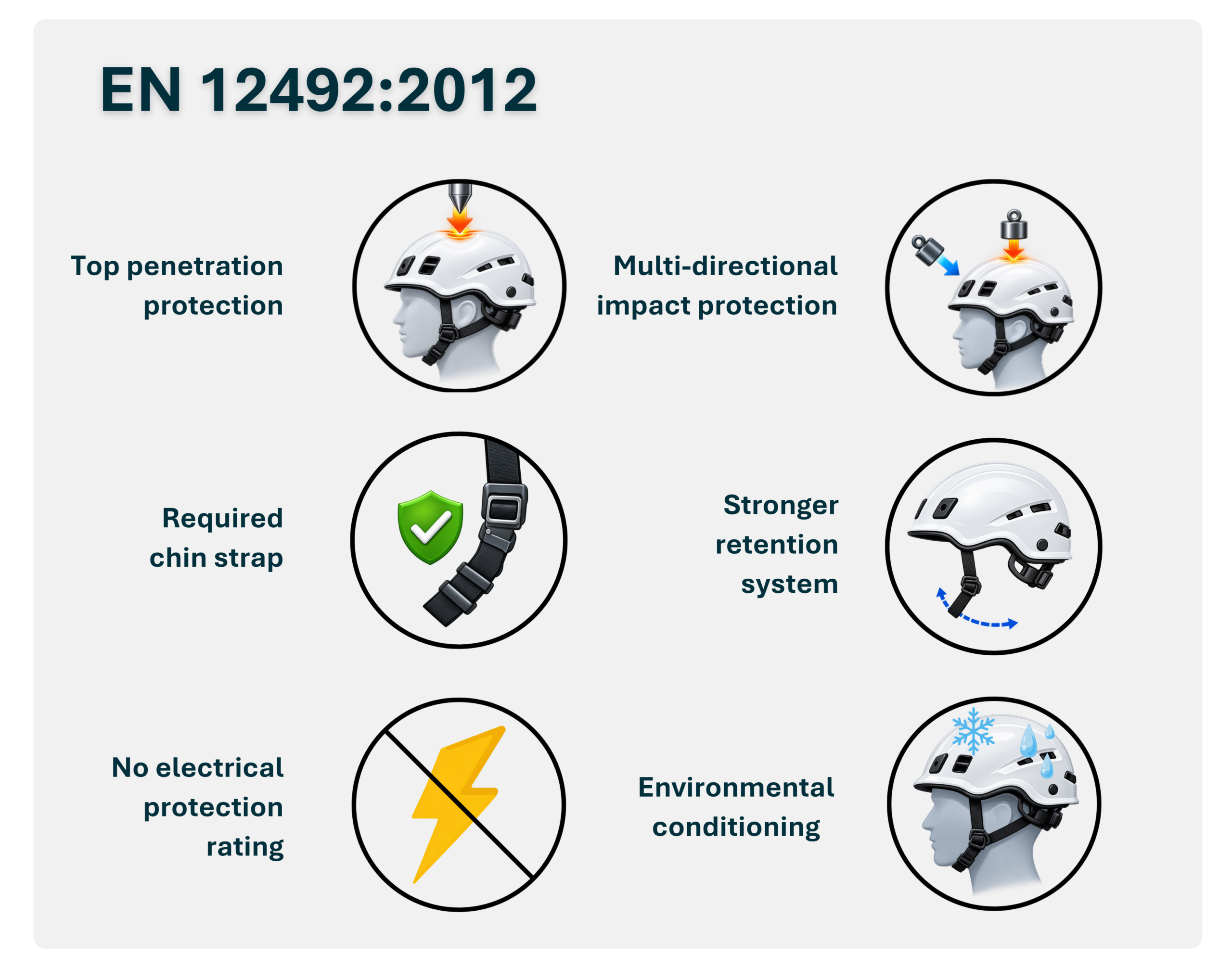
These are two separate performance standards developed for different applications. EN 12492 is the European standard for mountaineering helmets. ANSI/ISEA Z89.1 is the American standard for industrial head protection.

The standards share some impact and penetration testing concepts, but they differ in areas such as electrical protection, test methods, and integration with industrial PPE. ANSI/ISEA Z89.1-2026 also introduces Type I+ and Type II+ options with mandatory chin straps and enhanced retention performance.

Neither standard is universally “better.” Employers should select head protection that conforms to the appropriate standard and addresses the hazards present.

COMFORT

Both climbing-style helmets and hard hats can be comfortable to wear.

FACT

Modern industrial head protection is designed with comfort in mind. Many products feature adjustable suspension systems, ventilation, padding, and retention systems to provide a secure and comfortable fit for extended wear.

Make sure to try several head protection options to find one that fits comfortably and can be worn correctly throughout the workday.

CHOICE

I can decide which type or style is best for myself/my workers.

FACT

Your choice of head protection should be based on a thorough assessment of the hazards present in your workplace.

Conducting a hazard analysis is crucial to determine whether workers need Type I, Type II, Type I+, or Type II+ protection, as well as the appropriate electrical class and additional features.

CHIN STRAPS

Both ANSI/ISEA Z89.1 and EN12492 provide chin strap testing requirements.

FACT

ANSI/ISEA Z89.1 includes chin strap testing requirements for applicable head protection. Under ANSI/ISEA Z89.1-2026, a chin strap and enhanced retention performance are mandatory for Type I+ and Type II+ head protection.

EN 12492 also requires a chin strap and includes requirements for its design and retention performance.

Regardless of the standard, a helmet designed with a chin strap must be worn with the strap properly secured to provide its intended protection.

TYPE I VS TYPE II

ANSI/ISEA Z89.1 classifies head protection according to where and how it provides protection.

FICTION

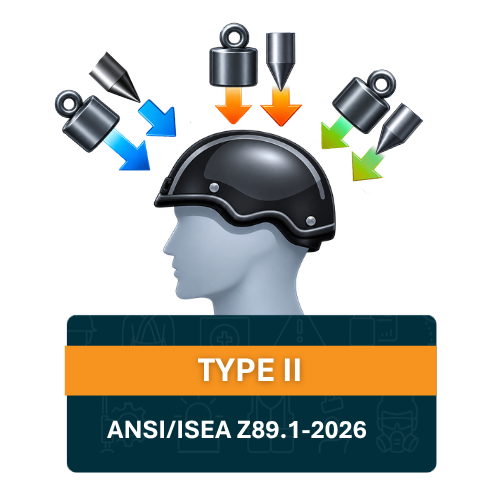
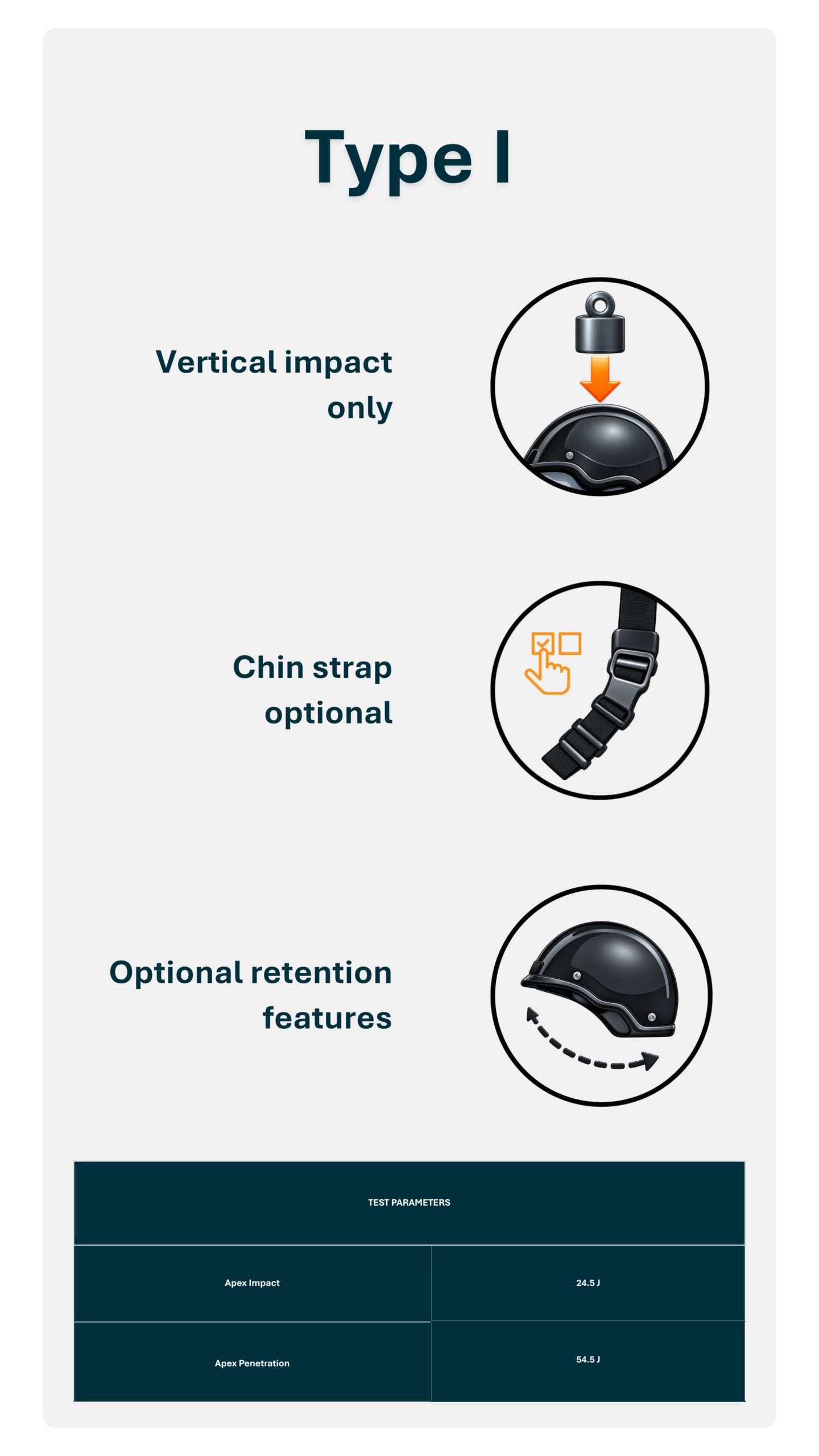
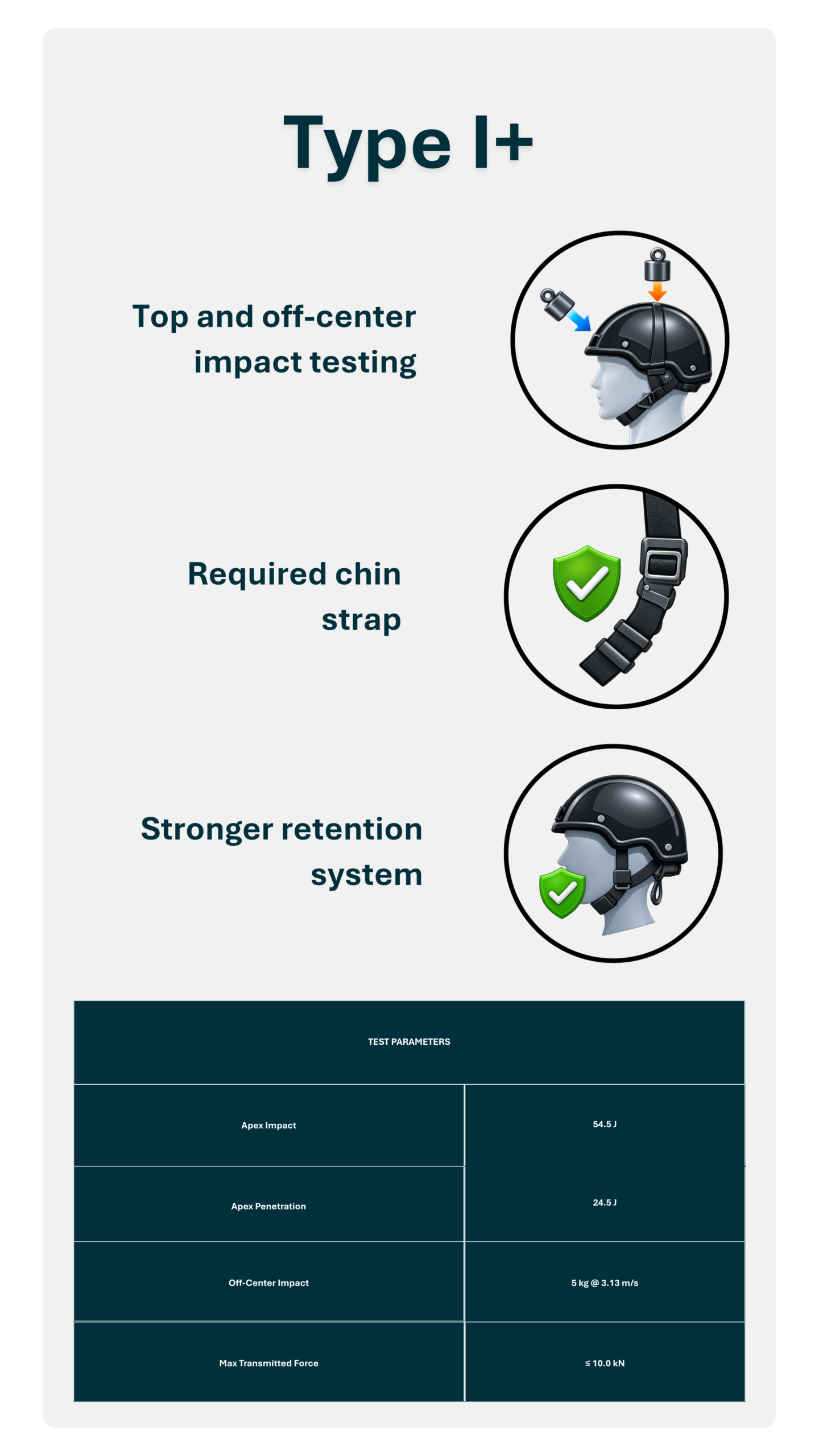
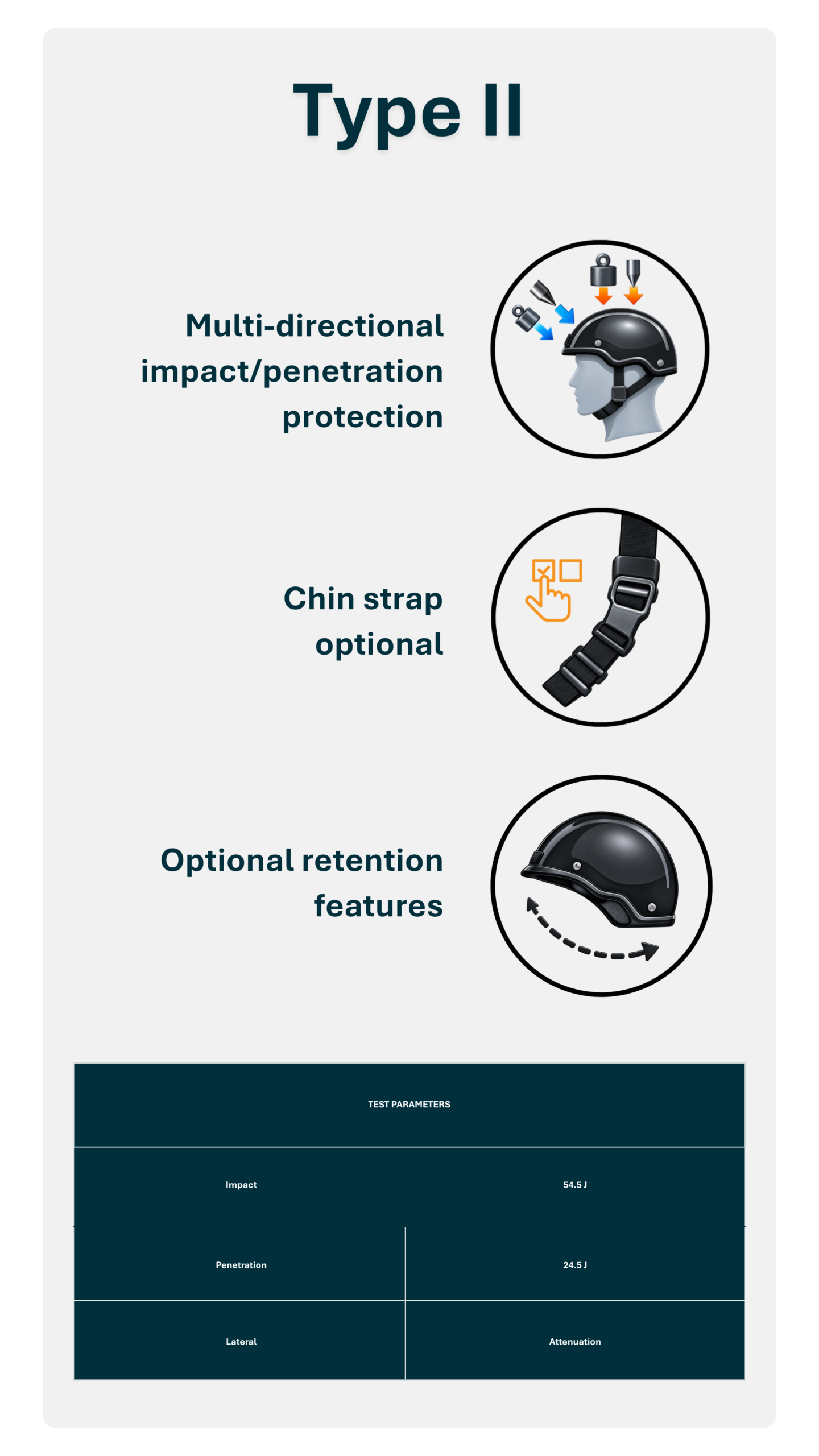
Type I provides top-of-head impact and penetration protection. Type II provides top, front, rear, and side impact protection, as well as side penetration protection.

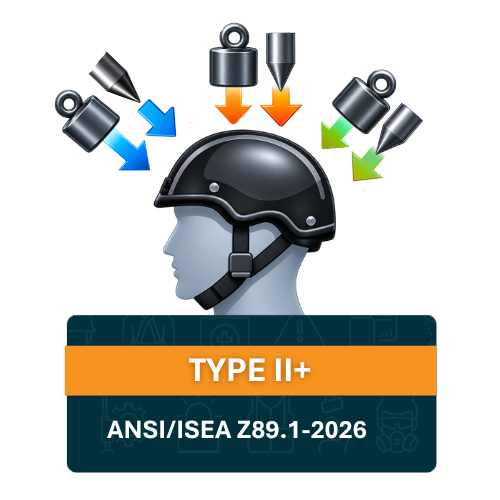
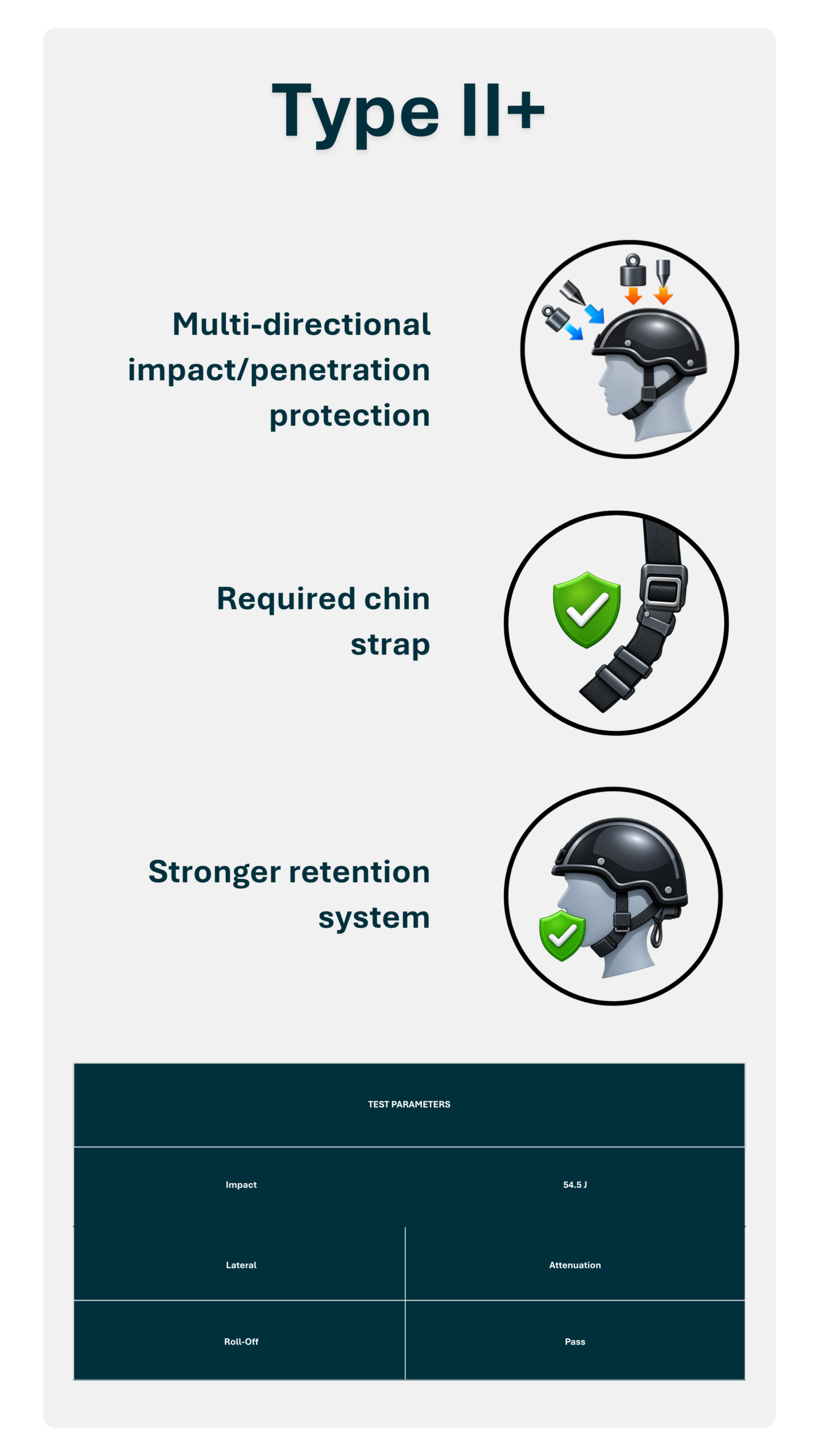
The updated standard also introduces Type I+ and Type II+. Type I+ adds a mandatory chin strap, enhanced retention performance, and expanded front, rear, and side impact protection to Type I requirements. Type II+ adds a mandatory chin strap and enhanced retention performance to Type II requirements.

The highest designation is not automatically the best choice for every job. Head protection should be selected based on the hazards present.

NEW DESIGNATIONS

The “+” designation is only a marketing term.

FICTION

TType I+ and Type II+ are performance designations established by ANSI/ISEA Z89.1-2026.

The “+” indicates additional requirements involving a mandatory chin strap, enhanced helmet retention, and, for Type I+, expanded front, rear, and side impact protection.

EVOLUTION

Head protection is evolving.

FACT

PPE and safety standards are always evolving. ANSI/ISEA Z89.1-2026 reflects advancements already appearing in industrial head protection, including chin straps, improved retention systems, and expanded impact protection.

Current compliant head protection is not automatically obsolete. The new designations give employers additional options for selecting higher-performance protection when jobsite hazards require it.

COMPLIANCE

The updated standard makes current head protection obsolete.

FICTION

The updated standard augments existing protection options rather than eliminating them.

Head protection that currently complies with applicable requirements can continue to be used. Employers should replace or upgrade equipment when their hazard assessment, product condition, manufacturer instructions, or workplace requirements indicate that a different level of protection is needed.

RETENTION

A chin strap is optional when wearing Type I+ or Type II+ head protection.

FICTION

A chin strap is a required component of Type I+ and Type II+ head protection.

For the helmet to provide its intended retention performance, the chin strap must be properly adjusted and secured. If the helmet comes off during a fall or impact, its ability to protect the worker is lost.

HAZARD ASSESSMENT

Every worker should immediately switch to Type II+ head protection.

FICTION

Type II+ offers extensive impact and retention performance, but not every workplace has the same hazards.

Employers should evaluate risks such as falling objects, side impacts, worker mobility, electrical exposure, and falls from height before selecting Type I, Type II, Type I+, or Type II+ head protection.

The right choice is the protection that matches the job.

Orange Fiction Graphic

Blanket statements like this are confusing and misleading. When picking the right head protection for your job, make sure to consider all hazards and job requirements.

No single type of head protection is “best” or “safest.”

Orange Fiction Graphic

Be wary of terms like “traditional hard hats” – while protecting workers for over 100 years, hard hats are available with cutting edge innovations in material science, cooling technology, and sensors.

Hard hats, just like climbing-style helmets, are
also available with chin straps and a wide variety of accessories, including earmuffs, goggles, and more.

Orange Fiction Graphic

These are two separate performance standards from two different parts of the world. EN12492 is the European standard for mountaineering helmets. ANSI/ISEA Z89.1 is the American standard for industrial head protection, and OSHA requires US employers to provide head protection that meets or exceeds this standard. 

These standards have some similarities in terms of impact and penetration resistance, but there are differences in other performance criteria. Head protection that conforms to either or both offers various levels of protection. It’s important to understand testing requirements for each when choosing which offers the best protection for the job at hand. 

Orange Fiction Graphic

The ANSI/ISEA Z89.1 standard does not require the inclusion of a chin strap for retention, however, if Type II protective headgear does have a chin strap, the standard requires it to be at least 0.5 inches wide, and strap elongation cannot be greater than 1 inch. It must be tested for retention.

EN12492 requires the inclusion of a chin strap. The chin strap is required to be at least 0.5 inches wide, and strap elongation cannot be greater than 1 inch. It must be tested for retention.

Orange Fiction Graphic

According to ANSI/ISEA Z89.1, head protection may meet Type I or Type II. Type 1 protects against top of the head impact, and Type 2 protects against both top of the head and side/crown impacts. Therefore, a Type II helmet will meet all of the performance requirements of a Type I helmet.

If a helmet or hard hat doesn’t conform to Z89.1, you can’t be sure of the type of protection it offers.


Orange Fiction Graphic

OSHA provides its inspectors with climbing-style head protection. This internal OSHA decision has no impact whatsoever on whether or not OSHA will issue a citation. OSHA requires head protection of any style that meets the ANSI/ISEA Z89 standard.

Orange Fiction Graphic
&
Orange Fiction Graphic

A climbing-style helmet can meet the requirements of the current Z89.1-2014 standard, as either a Type I or Type II. The standard is performance based and does not describe the style or design of the helmet.

ISEA is working with members of its Head Protection Product Group on the revision of ANSI/ISEA Z89.1, with an expected publish date in Q4. This revision will include new test methods and optional approvals to better define new head protection offerings in the market.

Orange Fiction Graphic

Modern industrial head protection is designed with comfort in mind. Many feature adjustable suspension systems, ventilation, and padding to ensure a secure and comfortable fit for extended wear. Make sure to try several head protection options to find one that fits comfortably.

Orange Fiction Graphic

Your choice of head protection should be based on a thorough assessment of the hazards present in your workplace. Conducting a hazard analysis is crucial to determine which type of head protection is best suited to protect you and your workers against the specific risks they face.

Orange Fiction Graphic

PPE and safety standards are always evolving. We are seeing that evolution now with advancements in industrial head protection. PPE and safety equipment providers will always supply is best for their customers based on the job for which workers need protection.
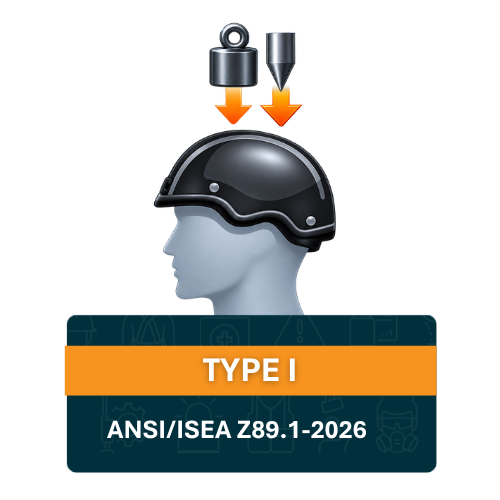
Get the Standard

ANSI/ISEA Z89.1-2026
American National Standard for Industrial Head Protection

Read the Label

Don't Judge a Helmet
by Its Shell

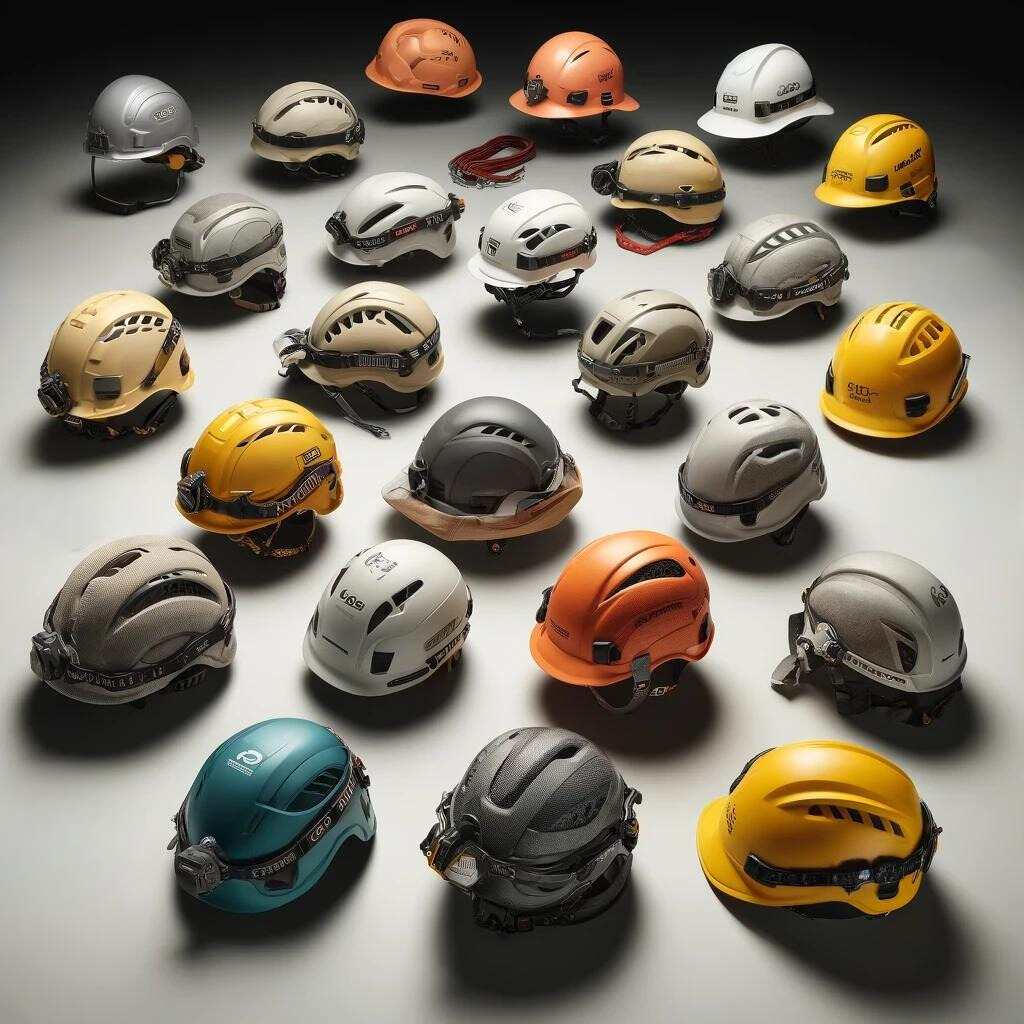
When selecting the right head protection for the task at hand, don’t judge a book by its cover, or in this case, “don’t judge head protection by the shell.”

You can’t simply look at a piece of head protection and know what level of protection it offers. To pick the right protection for the job at hand, read the label.

While they’re widely used by the industry, terms like “hard hat” or “safety helmet” aren’t defined in ANSI/ISEA Z89.1. Further complicating matters, styles vary by manufacturer and are constantly evolving.

So don’t pick head protection based on whether it’s marketed as a hard hat or safety helmet. Style is not the same as protection. Read the label for the helmet’s type, electrical class, and optional performance designations, including the new “+” designation.

Can you tell which of these industrial helmets is safer?

What Head Protection Options Are Available?

There are many varieties, types, and styles of head protection that conform to safety standards from around the world. In the United States, OSHA requires employers to provide head protection that meets applicable requirements, including ANSI/ISEA Z89.1, and some employers require head protection that also conforms to sections of the European Standard EN 12492. The updated ANSI/ISEA Z89.1 also includes new Type I+ and Type II+ designations for additional protection and retention performance.

What Do These Standards Tell Us?

Industrial head protection undergoes a variety of performance tests to help protect workers from workplace hazards. Learn about testing requirements for ANSI, CSA, and EN head protection standards, including impact, penetration, retention, and other performance criteria.

Get Your Copy Now

Want to keep these files handy? Use the button below to download your own copy.

Head Protection

Key to Helping Prevent Brain Injury

Scott Earnest, Associate Director of the National Institute for Occupational Safety and Health (NIOSH) Construction Office and Co-Chair of the NORA Construction Sector Council; and Stacey Simmons, Chair of the ISEA Head Protection Product Group discuss the importance of wearing head protection to prevent traumatic brain injuries among construction workers and how best to choose the appropriate one.

Additional Resources

Find Head Protection

OSHA Safety & Health Information Bulletin:
Head Protection: Safety Helmets in the Workplace

US Mandates:
OSHA Standard – 1910.135 – head protection

ANSI/ISEA Testing Graphics

The Latest News in

Head Protection

Search

Trending

Standards

Global PPE

Issues

We are the safety equipment industry, united in the goal of protecting workers worldwide.

Our Mission

The voice of credibility for the safety equipment industry

Members & Leadership

Learn about ISEA members, leadership and awards

Board of Trustees

Your elected officials to help guide the association

ISEA Foundation

We help develop talent and raise awareness about worker safety

Staff

Meet the team

Explore Membership

ISEA membership gives you a seat at the table, delivers powerful insights and lets you engage with peers.  

Our education & training programs improve the effectiveness of safety equipment industry professionals.

QSSP

Our education & training programs improve the effectiveness of safety equipment industry professionals.

Executive Summit

Hear progressive ideas, learn best practices, and make peer connections.

Annual Meeting

Collaborate on standards development and track industry & policy trends

Event Calendar

See all upcoming events

Webinar Library

Access our webinar library

We are a trusted resource for industry insights and policy, with a window to Washington

Advocacy & Issues

Gain a powerful advocate in the halls of government

Industry Impact

Measuring the impact of the safety equipment industry

Industry Intelligence

Reports and tools for ISEA members

Market Data Analysis

Benchmark market share & product growth trends

Newsroom

Access the latest safety news & insights

Safety Professional Resources

Keep your workforce safe

Newsletter

Get the latest safety news and PPE updates straight to your inbox.

Subscribe Today