

The U.S. Department of Labor’s Occupational Safety and Health Administration (OSHA) took an important step by issuing new guidance to help employers and workers prepare for opioid overdose emergencies in the workplace.
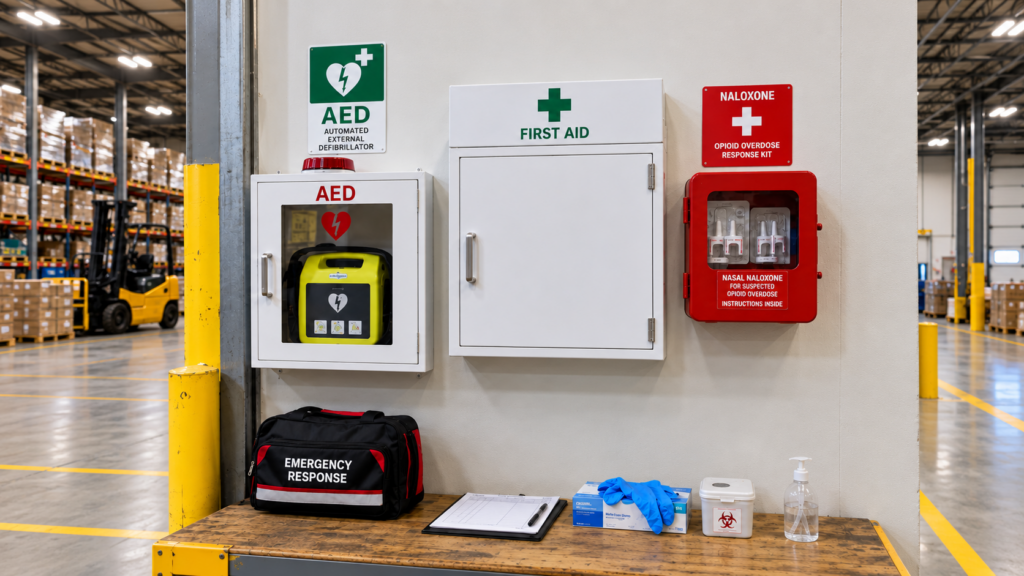
OSHA is encouraging workplaces to keep FDA-approved overdose-reversal medications, including naloxone, on hand; train workers to recognize and respond to an overdose; and store overdose-response kits in visible, easily accessible locations — just like an AED or a traditional first aid kit.
That is significant.
It reinforces something the safety community increasingly recognizes: naloxone is a lifesaving first aid tool, and workplaces should be prepared to use it.
The federal guidance comes just days after the International Safety Equipment Association released ANSI/ISEA Z308.1-2026, American National Standard for Minimum Requirements for Workplace First Aid Kits and Supplies. The newly revised standard adds naloxone as a recommended supplemental workplace first aid supply and encourages workplaces to keep at least two naloxone nasal sprays clearly identified and readily accessible near other emergency supplies.
Two developments. One clear message.
Taken together, OSHA’s guidance and the new ANSI/ISEA standard reflect a broader change in how workplace overdose preparedness is being approached.
This is a workplace safety issue.
An opioid overdose can happen anywhere, including at work. OSHA’s guidance makes that point directly and recommends treating overdose-reversal medications as part of emergency preparedness.
That means the conversation does not need to begin with assumptions about who uses opioids or why.
It can begin with the same question safety professionals ask about every other emergency:
If someone’s life were in danger at our workplace, would we have the right equipment available to help?
We already prepare workplaces with bandages, bleeding-control supplies, eyewash, AEDs and other emergency equipment because seconds matter.
Naloxone belongs in that same conversation. It can rapidly restore breathing during an opioid overdose. Emergency services should still be contacted immediately, but having naloxone available gives someone nearby an opportunity to act while help is on the way.
Moving workplace first aid forward
Adding naloxone to ANSI/ISEA Z308.1-2026 was designed to help workplace first aid programs reflect the emergencies employers and workers face today. The revised standard also strengthens guidance around bleeding control, tourniquets, mobile workers, training and other elements of modern emergency preparedness.
“Conformance to ANSI/ISEA Z308.1-2026 gives employers confidence that their workplace first aid supplies are aligned with current best practices and evolving occupational risks,” said Todd Van Houten, Chair of the ISEA First Aid Product Group, and Senior Director Digital Customer Experience at Cintas. “This important revision helps organizations move beyond minimum compliance toward a more effective emergency response strategy.”
Now, OSHA’s guidance adds another clear federal signal that overdose preparedness belongs within the workplace safety conversation.
For employers, the takeaway is practical: look at the first aid supplies you have today and consider whether they are ready for the emergencies that could happen tomorrow.
Naloxone is emergency equipment. It saves lives.
And increasingly, workplace safety guidance is recognizing that it deserves a place alongside the other tools we rely on when every second counts.
Learn more at safetyequipment.org/naloxone.